返回博客
口语 ## TOEFL口语部分 **TOEFL iBT考试**的口语部分旨在评估您在学术环境中用英语进行有效沟通的能力。 这部分考试包括几个任务,要求您根据提示表达您的观点、总结信息或描述您的经历。 *准备策略:* - **练习口语:** 尽可能多地练习用英语口语表达。您可以和朋友、语言伙伴一起练习,或者录下自己的声音并回听。 - **熟悉TOEFL口语题型:** 了解不同类型的口语题,例如独立口语题和综合口语题。 - **提高发音和流利度:** 努力提高您的发音清晰度和口语流利度。 - **扩展词汇量:** 学习与学术话题相关的词汇,以便更有效地表达您的观点。 - **有效利用时间:** 在考试中,注意时间管理,确保在规定的时间内完成每个任务。 > 提示: 使用在线资源和练习材料来模拟真实的TOEFL考试环境。 ## 提升英语口语的技巧 除了专门针对TOEFL的准备,以下是一些可以帮助您提高整体英语口语能力的技巧: - **沉浸式学习:** 尽可能让自己沉浸在英语环境中。观看英语电影和电视节目,听英语播客,阅读英语书籍。 - **积极参与对话:** 抓住一切机会用英语与母语人士或其他学习者交谈。 - **专注于发音:** 注意英语单词的发音,并练习难以发音的音素。 - **学习常用短语和表达:** 学习英语中常用的短语和表达,以便更自然地进行交流。 - **寻求反馈:** 请母语人士或英语老师对您的口语进行反馈,并根据反馈进行改进。 ## AI在英语学习中的应用 **人工智能 (AI)** 工具在英语学习中变得越来越流行。 这些工具可以提供个性化的反馈、练习和支持。 *AI工具的例子:* - **语音识别软件:** 帮助您提高发音。 - **语言学习应用程序:** 提供互动课程和练习。 - **AI写作助手:** 帮助您改进语法和词汇。 请记住,虽然AI工具很有用,但它们不应该完全取代与人类的互动。 ## 关于ETS **ETS (Educational Testing Service)** 是TOEFL考试的开发和管理机构。 了解ETS的官方资源和指南可以帮助您更好地准备考试。 请访问ETS的官方网站 [https://www.ets.org/toefl](https://www.ets.org/toefl) 获取更多信息。TOEFL备考技巧 ## TOEFL备考技巧 **欢迎来到我们的TOEFL备考指南!** 本指南旨在帮助您在TOEFL考试中取得优异成绩。我们将涵盖考试的各个方面,并提供实用的技巧和策略。 * **了解TOEFL考试:** TOEFL (Test of English as a Foreign Language) 是一项评估非英语母语人士英语能力的标准化考试,主要用于申请英语国家的大学和研究生院。该考试由ETS (Educational Testing Service) 管理。了解考试形式、评分标准和题型至关重要。 您可以在ETS的官方网站上找到更多信息:www.ets.org/toefl * **制定学习计划:** 制定一个现实可行的学习计划。将您的学习时间分配到听力、阅读、口语和写作四个部分。 确保您有足够的时间练习每个部分。 * **提高英语水平:** - **阅读:** 阅读各种英文材料,例如新闻文章、学术论文和小说。注意生词和语法结构。 - **听力:** 听英语播客、新闻和讲座。尝试做笔记并总结您听到的内容。 - **口语:** 尽可能多地练习说英语。与母语人士交谈,参加英语角,或者使用语言学习应用程序。 - **写作:** 练习写各种类型的文章,例如议论文、说明文和描述文。请英语老师或母语人士帮您修改。 * **利用在线资源:** 有很多在线资源可以帮助您准备TOEFL考试。例如: - **TOEFL官方网站:** www.ets.org/toefl - **YouTube频道:** 搜索 "TOEFL preparation" - **在线练习题:** 许多网站提供免费的TOEFL练习题。 * **模拟考试:** 定期进行模拟考试,以熟悉考试形式和时间限制。这将帮助您在实际考试中更加自信。 * **寻求帮助:** 如果您在备考过程中遇到困难,请不要犹豫寻求帮助。您可以向英语老师、辅导员或同学寻求建议。 * **AI工具的应用:** 现在有很多AI工具可以帮助你提高英语水平,例如AI语法检查器,AI写作助手等。合理利用AI工具可以提高学习效率。 > **记住:** 坚持不懈是成功的关键。祝您在TOEFL考试中取得好成绩!发音 ## 发音 **为什么发音在 TOEFL 考试中很重要?** 良好的发音不仅仅是为了让别人听懂你。在 TOEFL iBT 口语和写作部分,清晰的发音会直接影响你的评分。评分员会评估你的语音清晰度,包括你的重音、语调和节奏。即使你的语法和词汇都很棒,糟糕的发音也会降低你的分数。 * **影响听力理解:** 如果你自己的发音不准确,你可能难以理解母语人士的口语,这会影响你的 TOEFL 听力部分。 * **影响口语表达:** 不清晰的发音会分散听者的注意力,使他们难以理解你的观点。 * **影响写作质量:** 虽然写作部分不直接评估发音,但练习发音可以帮助你更好地理解英语的语音规则,从而提高你的拼写和语法准确性。 **如何提高你的发音?** - **模仿母语人士:** 听英语播客、观看英语电影和电视节目,并尝试模仿他们的发音。注意他们的重音、语调和节奏。 - **使用发音工具:** 有许多在线工具和应用程序可以帮助你练习发音。例如,你可以使用像 Forvo (https://forvo.com/) 这样的网站来听不同单词的母语发音。 - **录音并回听:** 录下你自己的声音,并与母语人士的发音进行比较。注意你需要改进的地方。 - **学习音标:** 学习国际音标 (IPA) 可以帮助你更好地理解英语的语音系统。 - **寻求反馈:** 请母语人士或英语老师听你的发音,并提供反馈。 - **关注最小对立体 (Minimal Pairs):** 练习区分发音相似的单词,例如 "ship" 和 "sheep"。 - **利用 AI 工具:** 一些 AI 驱动的工具可以分析你的发音并提供个性化的反馈。 **TOEFL 口语发音技巧** * **清晰地表达每个单词:** 不要含糊不清或吞音。 * **注意重音:** 英语单词通常只有一个重音音节。确保你正确地重读了每个单词。 * **使用正确的语调:** 语调可以改变句子的含义。在陈述句中使用降调,在疑问句中使用升调。 * **注意节奏:** 英语是一种重音计时语言,这意味着重音音节之间的间隔大致相等。 * **练习 TOEFL 口语题目:** 通过练习真实的 TOEFL 口语题目,你可以熟悉考试的形式,并提高你的发音水平。你可以找到很多免费的练习材料在 ETS 官方网站 (www.ets.org)。 **常见发音错误** * **混淆相似的音素:** 例如,/ɪ/ 和 /iː/,/θ/ 和 /s/。 * **忽略弱读:** 在非重读音节中,元音通常会弱化成 /ə/ (schwa)。 * **不正确的重音:** 将重音放在错误的音节上。 * **缺乏语调变化:** 说话单调乏味。 **结论** 提高发音需要时间和努力,但这是 TOEFL 考试成功的关键。通过练习和反馈,你可以提高你的发音水平,并在 TOEFL 考试中取得更好的成绩。记住,清晰的发音不仅能帮助你获得更高的分数,还能让你在日常生活中更好地与人交流。

## TOEFL口语好成绩和优秀成绩的区别 (提示:不是你的口音) Many students believe that a good TOEFL Speaking score hinges on having a perfect American or British accent. This is a common misconception. While clear pronunciation is important, it's not the only factor, and often not even the *most* important. So, what *does* separate a good TOEFL Speaking score (around 22-25) from a great one (26+)? It boils down to these key areas: * **Development:** Are your ideas fully developed and supported with specific details and examples? A good answer might state a preference, but a great answer *explains why* with compelling reasons and illustrations. * **Organization:** Is your response logically structured and easy to follow? Do you use transition words effectively to guide the listener? A good answer might have a clear beginning, middle, and end, but a great answer flows seamlessly and connects ideas in a sophisticated way. * **Delivery:** This *does* include pronunciation, but also encompasses pacing, intonation, and fluency. A good answer is understandable, but a great answer is engaging and sounds natural. Remember, ETS graders are listening for clarity and comprehensibility, not necessarily a specific accent. * **Language Use:** Do you use a wide range of vocabulary and grammatical structures accurately and effectively? A good answer uses simple language correctly, but a great answer demonstrates a command of more complex language. **How to Improve Your TOEFL Speaking Score** Here are some actionable tips to help you move from "good" to "great": * **Practice, Practice, Practice:** Record yourself answering TOEFL Speaking questions and analyze your performance. Pay attention to the areas mentioned above. * **Focus on Development:** When practicing, challenge yourself to provide more detailed explanations and examples. Ask yourself "why?" repeatedly to dig deeper into your ideas. * **Structure Your Responses:** Use a consistent template for each type of TOEFL Speaking question. This will help you organize your thoughts and ensure that you cover all the key points. * **Expand Your Vocabulary:** Learn new words and phrases related to common TOEFL topics. Practice using them in your speaking responses. * **Get Feedback:** Ask a teacher, tutor, or native English speaker to listen to your responses and provide feedback. **The Role of AI in TOEFL Preparation** AI-powered tools can be incredibly helpful for improving your TOEFL Speaking score. These tools can provide instant feedback on your pronunciation, fluency, and grammar. They can also help you identify areas where you need to improve. **Don't Obsess Over Your Accent** While working on your pronunciation is beneficial, don't let it become your sole focus. Remember that ETS (美国教育考试服务中心) graders are trained to evaluate your overall communication skills, not your accent. Focus on developing your ideas, organizing your responses, and using language effectively. By focusing on these key areas, you can significantly improve your TOEFL Speaking score and achieve your desired results.

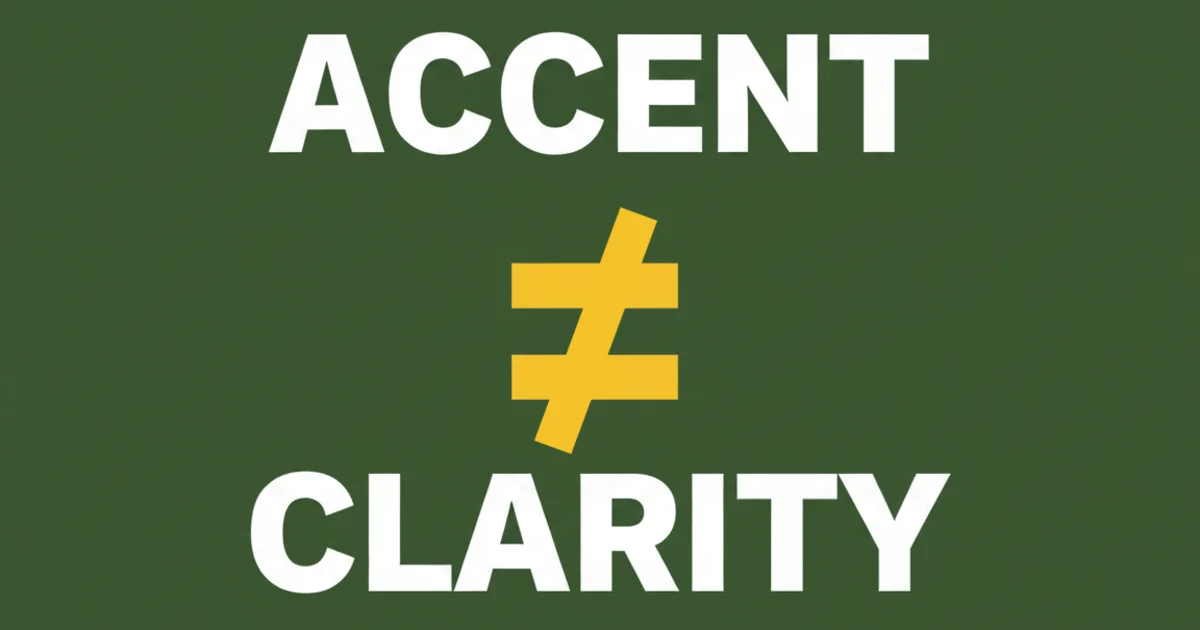
关于TOEFL口语最大的误解是什么?是你的口音会降低你的分数。 事实是,清晰度与口音并不相同。 了解TOEFL评分员真正关心的是什么,以及如何提高你的Delivery(表达)分数。

2025年1月20日
6 分钟阅读
TOEFL AI Team
## TOEFL口语好成绩和优秀成绩的区别 (提示:不是你的口音)

Many students believe that a good TOEFL Speaking score hinges on having a perfect American or British accent. This is a common misconception. While clear pronunciation is important, it's not the only factor, and often not even the *most* important.

So, what *does* separate a good TOEFL Speaking score (around 22-25) from a great one (26+)? It boils down to these key areas:

*   **Development:** Are your ideas fully developed and supported with specific details and examples? A good answer might state a preference, but a great answer *explains why* with compelling reasons and illustrations.

*   **Organization:** Is your response logically structured and easy to follow? Do you use transition words effectively to guide the listener? A good answer might have a clear beginning, middle, and end, but a great answer flows seamlessly and connects ideas in a sophisticated way.

*   **Delivery:** This *does* include pronunciation, but also encompasses pacing, intonation, and fluency. A good answer is understandable, but a great answer is engaging and sounds natural. Remember, ETS graders are listening for clarity and comprehensibility, not necessarily a specific accent.

*   **Language Use:** Do you use a wide range of vocabulary and grammatical structures accurately and effectively? A good answer uses simple language correctly, but a great answer demonstrates a command of more complex language.

**How to Improve Your TOEFL Speaking Score**

Here are some actionable tips to help you move from "good" to "great":

*   **Practice, Practice, Practice:** Record yourself answering TOEFL Speaking questions and analyze your performance. Pay attention to the areas mentioned above.

*   **Focus on Development:** When practicing, challenge yourself to provide more detailed explanations and examples. Ask yourself "why?" repeatedly to dig deeper into your ideas.

*   **Structure Your Responses:** Use a consistent template for each type of TOEFL Speaking question. This will help you organize your thoughts and ensure that you cover all the key points.

*   **Expand Your Vocabulary:** Learn new words and phrases related to common TOEFL topics. Practice using them in your speaking responses.

*   **Get Feedback:** Ask a teacher, tutor, or native English speaker to listen to your responses and provide feedback.

**The Role of AI in TOEFL Preparation**

AI-powered tools can be incredibly helpful for improving your TOEFL Speaking score. These tools can provide instant feedback on your pronunciation, fluency, and grammar. They can also help you identify areas where you need to improve.

**Don't Obsess Over Your Accent**

While working on your pronunciation is beneficial, don't let it become your sole focus. Remember that ETS (美国教育考试服务中心) graders are trained to evaluate your overall communication skills, not your accent. Focus on developing your ideas, organizing your responses, and using language effectively. By focusing on these key areas, you can significantly improve your TOEFL Speaking score and achieve your desired results.

如果你正在准备TOEFL考试,你可能至少有过一次这样的想法:“我的口音会降低我的分数。”

这是关于TOEFL考试的最大、最持久的误解之一,它正在阻碍你的分数提升。

学生们花费大量时间担心自己的发音是否“美国化”或“英国化”,而忽略了评分员真正关心的事情。 事实是:清晰度与口音并不相同。

一个“好”的分数(比如20-23分)通常来自一个语法正确但听起来像机器人、紧张或表达不清的学生。 一个“优秀”的分数(26+)来自一个充满自信和清晰表达的学生,无论他们的母语口音如何

官方TOEFL评分标准中没有“口音”这一项。 它们有一个关于**“表达 (Delivery)”**的类别。 让我们来分解一下这到底意味着什么。


高分“表达 (Delivery)”的3大支柱

你的表达 (Delivery) 分数基于三个主要支柱。 请注意,“完美口音”不是其中之一。

1. 清晰度与发音 (Clarity & Pronunciation)

这就是口音误解的来源。 评分员并不关心你是否有口音; 他们只关心你的口音是否使你的话语难以理解

问题: 你可能将 /iː/ (sheep) 和 /ɪ/ (ship) 发成相同的声音,或者省略复数单词上的“s”。 这些小的、习惯性的错误可能会使评分员感到困惑,并迫使他们猜测你的意思。

解决方法: 专注于可理解性 (intelligibility)。 录下自己的声音并听。 你的“th”音是否发成“z”或“d”? 你是否清楚地发出了过去时动词结尾的“ed”? 这是关于润色你现有的语音,而不是改变你自己的身份。

专业提示: 如果你不确定自己是否清晰,不要猜测。 使用可以告诉你答案的工具。 这正是我们构建MESA的原因。 我们的应用程序旨在为你提供关于这些对TOEFL至关重要的特定声音(如 /iː/ 与 /ɪ/)的即时、精确的反馈。 它可以帮助你定位并纠正那些让你失分的实际发音习惯。

2. 语速与流利度 (Pacing & Fluency)

这是你的说话节奏。 一个好的回答以自然、一致的速度流畅地进行。

问题: 说话太快,这让你难以理解。 或者,说话太慢,有很长、频繁的停顿(“嗯”,“啊”,“like……”)。 这些填充词向评分员表明你正在努力寻找正确的语言。

解决方法: 练习用短暂的、无声的停顿来代替你的“嗯”和“啊”。 一个1秒的无声停顿听起来比1秒的“嗯”自信100倍。 它给你一个思考的时间,并使你的讲话听起来清晰而有条理。

3. 语调 (Intonation)

这是区分23分和27分的“秘密武器”。 语调是你声音的音乐——它上升和下降的方式。

问题: 用平淡、单调的声音说话。 这让你听起来很无聊,或者(更糟糕的是)像你背诵了一份脚本。 评分员经过训练可以发现背诵的答案,他们会对此进行惩罚。

解决方法: 使用强调和情感! 当你给出你的主要观点时,让你的声音稍微提高。 当你列出你的两个理由时,使用“列举语调”。 这种活力向评分员表明你对这个话题感到舒适和投入,这表明了高水平的流利度。


“好”与“优秀”的实际表现

让我们来看一个简单的差异分解。

评分因素 (Scoring Factor)一个“好”的分数 (20-23)一个“优秀”的分数 (26+)
清晰度 (Clarity)评分员必须费力才能理解每个回答中的1-2个关键词。所有单词都清晰易懂,即使带有非母语口音。
语速 (Pacing)很多犹豫(“嗯”,“啊”)或语速过快。 流程不流畅。流畅、自然的速度。 停顿被策略性地用于强调一个观点。
语调 (Intonation)单调。 所有句子都有相同的平淡节奏。充满活力。 说话者的声音上升和下降,以显示哪些想法是重要的。

比较图,显示TOEFL口语评分中的口音与清晰度


你的3步行动计划来提高表达 (Delivery)

不要只是阅读; 将其付诸行动。

  1. 录音,不要只是练习: 使用你的手机录制一个练习回答。 只听语速。 你使用了多少次填充词?

  2. 识别1个问题发音: 再次收听。 是否有一个你难以发出的声音? (比如“th”,“r”或“v”)。 在接下来的3天里,只针对那个声音进行练习。

  3. 充满活力地练习: 最后一次录音,但这一次,在说话时微笑(它自然地改善了语调),并专注于用活力说话,而不仅仅是速度。


底线

你不需要一种新的口音。 你只需要成为最清晰、最自信的自己

要开始,你最想停止使用的#1填充词是什么? 在下面的评论中告诉我们!

准备好提高你的TOEFL口语分数了吗? 开始使用TOEFL AI练习,并获得关于你的发音、语速和语调的即时反馈。

分享这篇文章